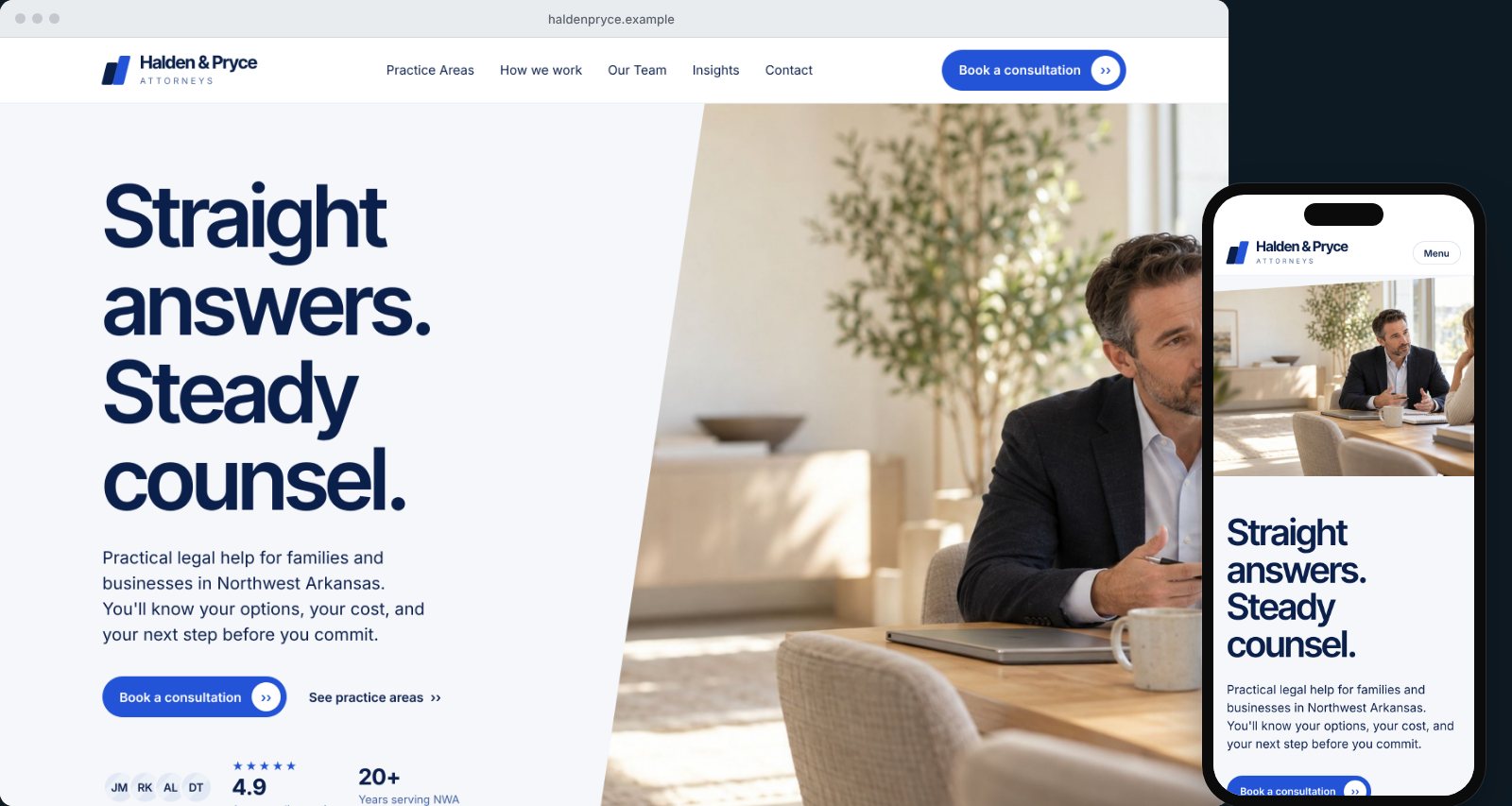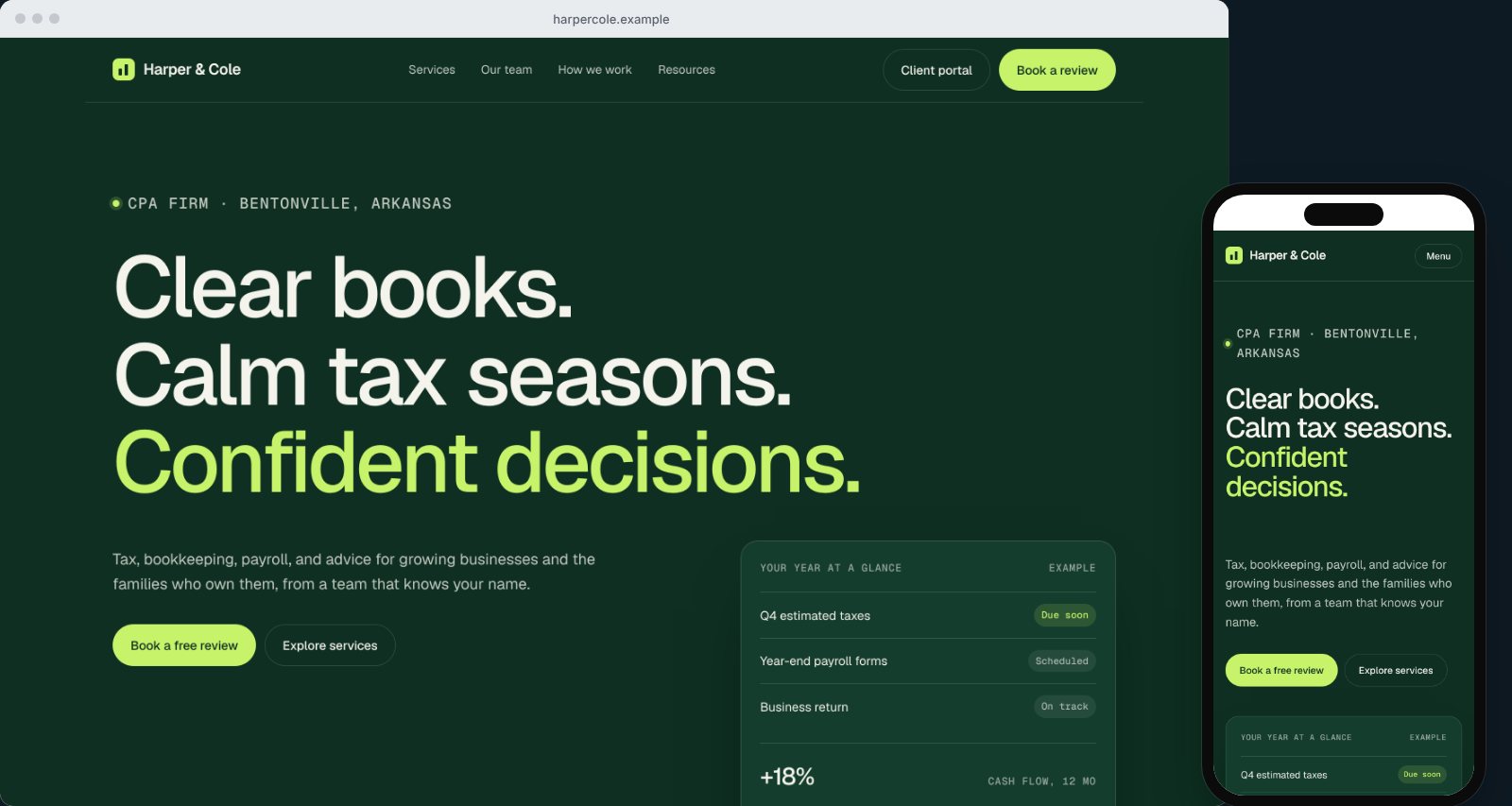
Clients hire people, not firms. The best CPA websites make a prospect feel like they already know who will handle their books before they ever call.
Key takeaways
- Referrals bring most accounting clients, but nearly everyone checks the firm's website first.
- Online search is a real second channel, and it's growing.
- Introduce your people early. Faces and credentials build more trust than stock photos of calculators.
- Launch or refresh before tax season, when most clients choose a firm.
The referral is only half the sale
Ask any CPA where new clients come from and the answer is usually "referrals." The data agrees: a 2025 TaxDome survey of 353 business clients found 58% found their current accountant through a referral, with online search a distant but meaningful second at 17%.
What that number hides is what happens between the referral and the phone call. Hinge Research Institute found that 81% of professional services buyers check out a firm's website before hiring. A friend's recommendation gets you on the list; your website decides whether you stay on it.
Lead with the people, not the paperwork
Most accounting websites open with a stock photo of someone typing on a calculator and a headline about "comprehensive financial solutions." It tells a prospect nothing about who they'd actually be working with.
A stronger approach: a clear, text-forward headline that says who you serve, followed immediately by your team. Our sample CPA firm homepage does exactly this, with a simple hero and then the partners introduced by name, credentials, and focus area. For a solo practitioner, the sample small business tax page puts the CPA's face and background right next to the service.
Build a page for each core service
"Accounting services" isn't what people search for. They search for small business tax preparation, bookkeeping for contractors, payroll services, or a CPA for rental property. Each core service deserves its own page that covers:
- Who it's for: industries, business sizes, or life situations.
- What's included: a plain list, not jargon.
- How it works: onboarding, document collection, timelines, and communication.
- Pricing approach: even a range or "packages start at" reduces friction.
- Who handles it: the CPA or team behind the work.
These pages serve referred prospects confirming you're a fit, and they're the pages that rank for search.
Specialize where you can
Firms with a clear niche, such as construction companies, medical practices, real estate investors, or nonprofits, have an easier time online. A focused page like "Accounting for Northwest Arkansas Contractors" speaks directly to a specific buyer and competes for searches generalist firms barely target. You don't have to turn away other work; you just need to show depth where it counts.
Plan your website around tax season
A large share of a firm's new clients sign on between January and April. That timing should shape your website plan:
- Launch in the fall so search engines have time to index the new site before demand peaks.
- Make capacity clear. If you're accepting new clients, say so. If you're full for individual returns, steer people toward services you still have room for.
- Publish deadline reminders and document checklists. They're useful, linkable, and they bring searchers to your site.
- Make booking easy. A consultation form that captures business type and the kind of help needed lets you triage quickly when the phone is ringing.
A consultation form built for busy season
Your form should collect just enough to route the inquiry: name, contact details, business or individual, the type of help needed, and a short note. Ask visitors not to include Social Security numbers or other sensitive financial data in the form; that belongs in your secure client portal. Our sample CPA contact page shows a clean version.
Local SEO for accounting firms
- Complete your Google Business Profile with the most specific category, such as "Certified Public Accountant" or "Tax Preparation Service."
- Ask happy clients for reviews after tax season, when you've just delivered results.
- Keep your firm's name, address, and phone identical across Google, the AICPA and state society directories, and your website.
- Add a client portal link and secure upload instructions so returning clients use your site too.
Common CPA firm website mistakes
- "Tax, accounting, and advisory services" with nothing more. Prospects need to see whether you handle their situation, like S corps, rental properties, or multi-state returns.
- No mention of who you don't serve. Saying you focus on small businesses, or don't prepare simple individual returns, filters out poor-fit inquiries before they reach your inbox.
- A client portal link buried in the footer. Existing clients use your website most often to upload documents. Put the portal in the header.
- Collecting sensitive documents through a contact form. Tax documents belong in a secure portal, never in a general web form or email attachment.
- A site that goes quiet after April. Update your homepage for extension season, year-end planning, and new-business setup so the site feels current all year.
Turn your website into a year-round practice tool
Tax season compresses a year of client contact into a few months. A good website spreads the work out. Publish your document checklist in January so clients arrive prepared. Post an extension explainer in March. Share quarterly estimated payment reminders, a mid-year planning checklist, and a year-end tax moves article in November.
Each of these pages saves your staff from answering the same questions repeatedly, and each one is something business owners search for. Over time they become the content that brings new clients to your firm during the slower months, when you actually have time to onboard them properly.
How FreshSite builds CPA websites
FreshSite builds custom websites for accounting and tax firms with team bios, service pages, consultation forms, and search basics included, then hosts, secures, and maintains them for one monthly price. Plans start at $59 a month with a $299 setup fee and run month to month after three months.
See more on our CPA firm websites page, or talk to us before tax season.
Frequently asked questions
Do CPA firms really need a website if most clients come from referrals?
Yes, because referred clients still check you out first. A referral gets you on the shortlist; your website decides whether they call. A dated or thin site can quietly undo a strong recommendation, while a clear, professional one confirms it.
What pages should an accounting firm website have?
A homepage that states who you serve and where, a page for each core service (such as tax preparation, bookkeeping, payroll, and advisory), team bios with credentials, a page explaining how working with you works, and a short consultation form. A client portal link and FAQs are helpful extras.
When is the best time for a CPA firm to launch a new website?
Ideally in the fall, before tax season starts. Much of a firm's annual client acquisition happens between January and April, so having the new site live and indexed by then puts it to work during peak demand.
How much does a CPA firm website cost?
Agency builds commonly run $8,000 to $25,000 or more. FreshSite builds custom CPA firm websites starting at $59 a month with a $299 setup fee, with hosting, security, and maintenance included.