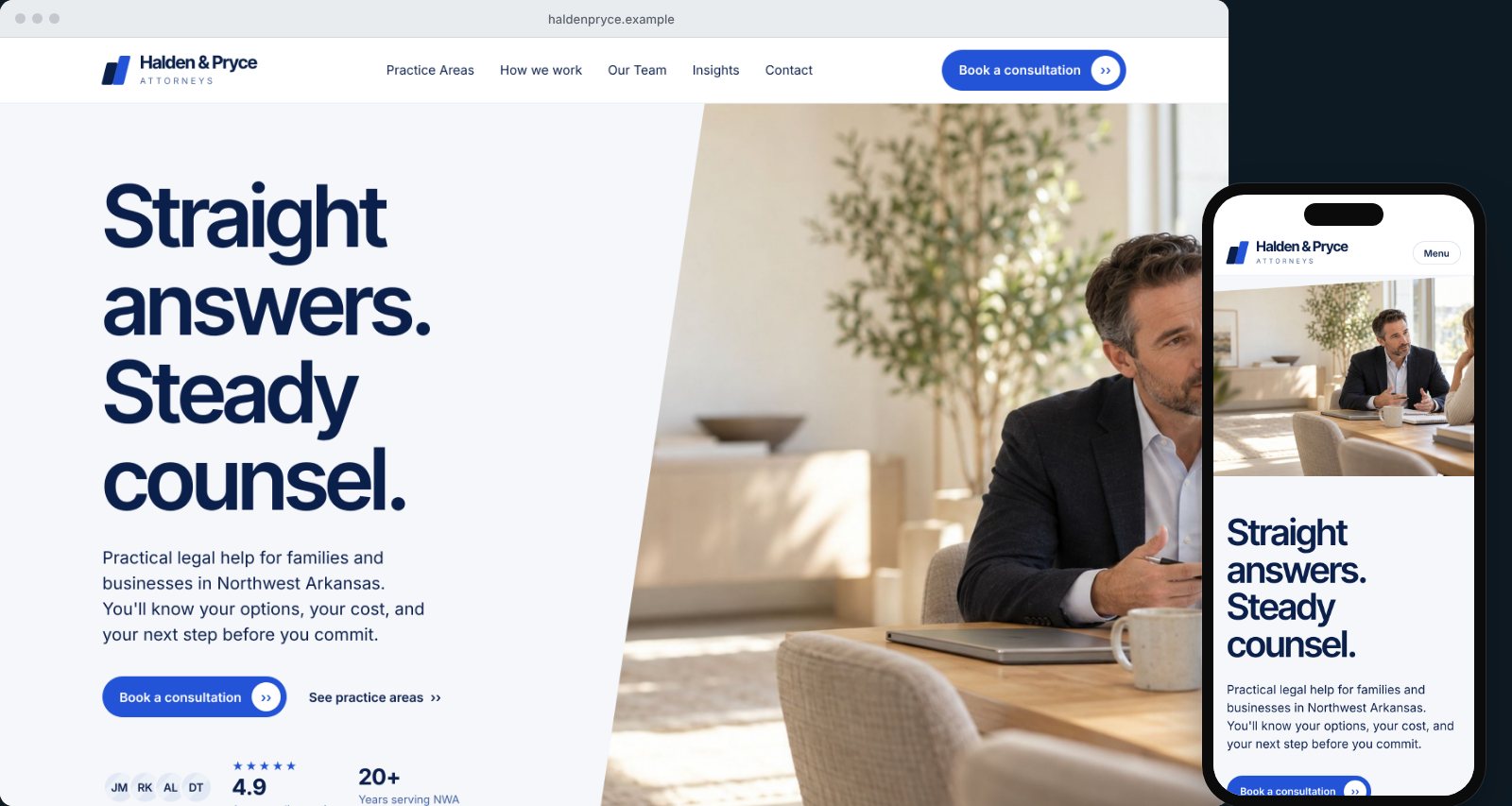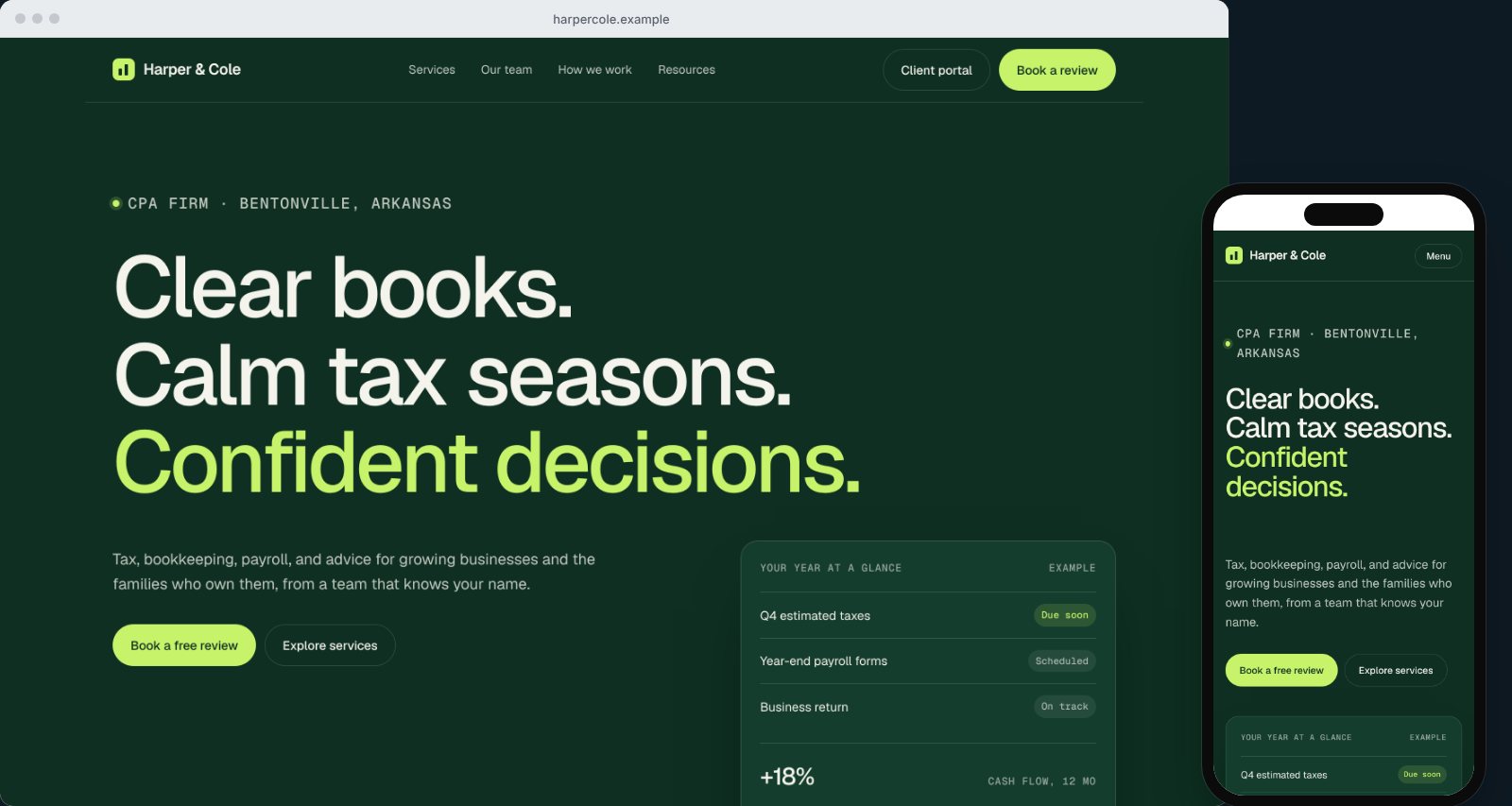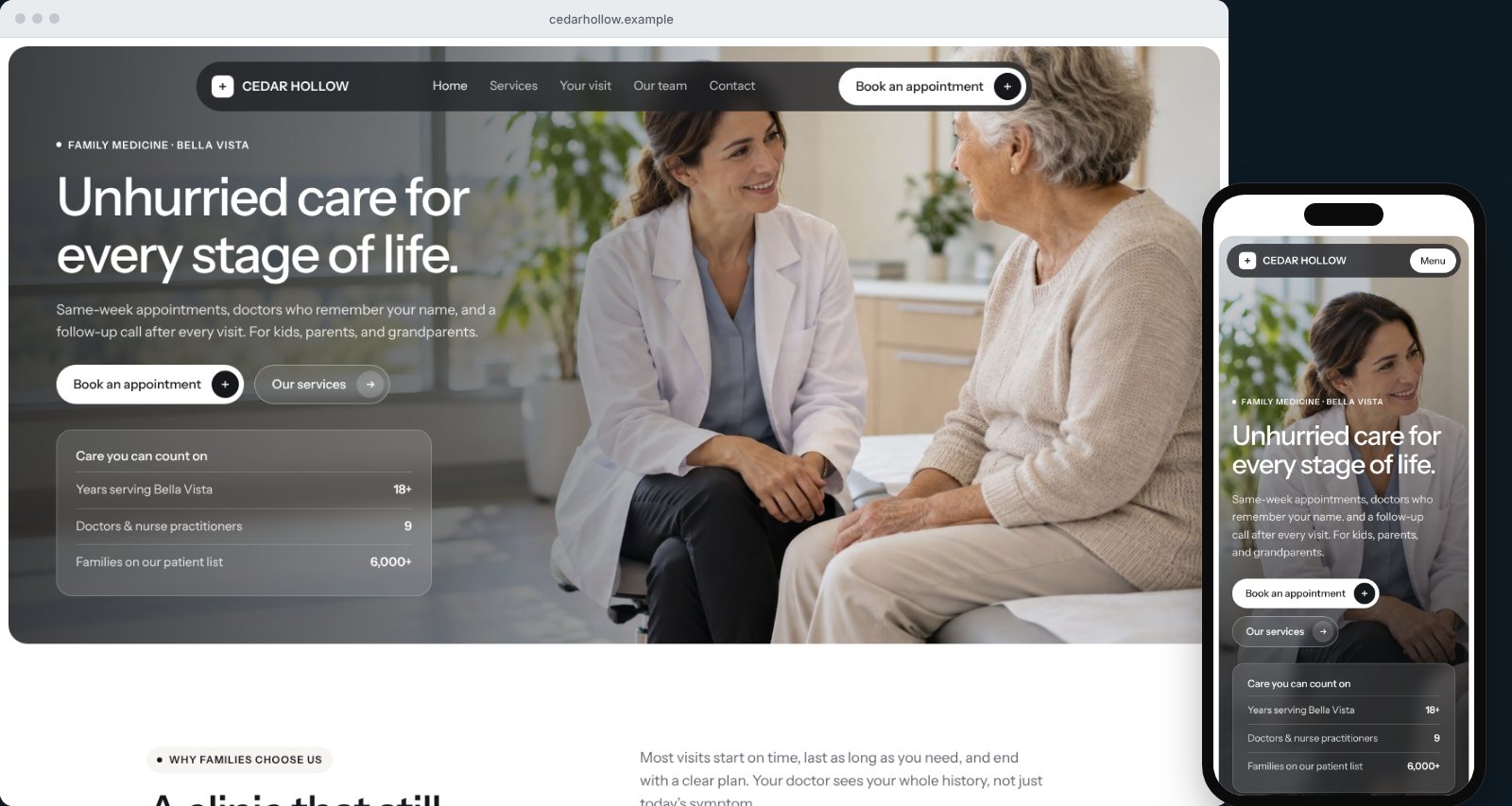
In professional services, you're rarely chosen in the first meeting. You're chosen, or quietly eliminated, long before anyone picks up the phone.
Key takeaways
- Most buyers research and shortlist firms on their own before contacting anyone.
- Your website has to answer "Are they credible?" and "Have they solved problems like mine?"
- Service pages, case studies, and expert bios do the heavy lifting.
- Make the first step easy and low-pressure, and qualify the conversation before it happens.
The shortlist happens without you
Gartner's research on B2B buying found that buyers spend only about 17% of their purchase time meeting with potential suppliers, and if they're comparing three firms, each one gets roughly 5% of that attention. The rest of the time goes to independent research and internal discussion.
Hinge Research Institute found something even sharper: 87% of professional services buyers rule out a provider before talking with them, and 81% say they check out a firm's website as part of that research. For consultants, advisors, engineers, and agencies, the website is where most of the selling actually happens.
Say who you help and what you solve
"Strategic solutions for growing organizations" could describe almost any firm. Buyers skim for signals that you understand their situation. Your homepage headline should name the client and the problem, for example: "Operations consulting for manufacturers outgrowing their systems," or "Fractional CFO services for founder-led companies."
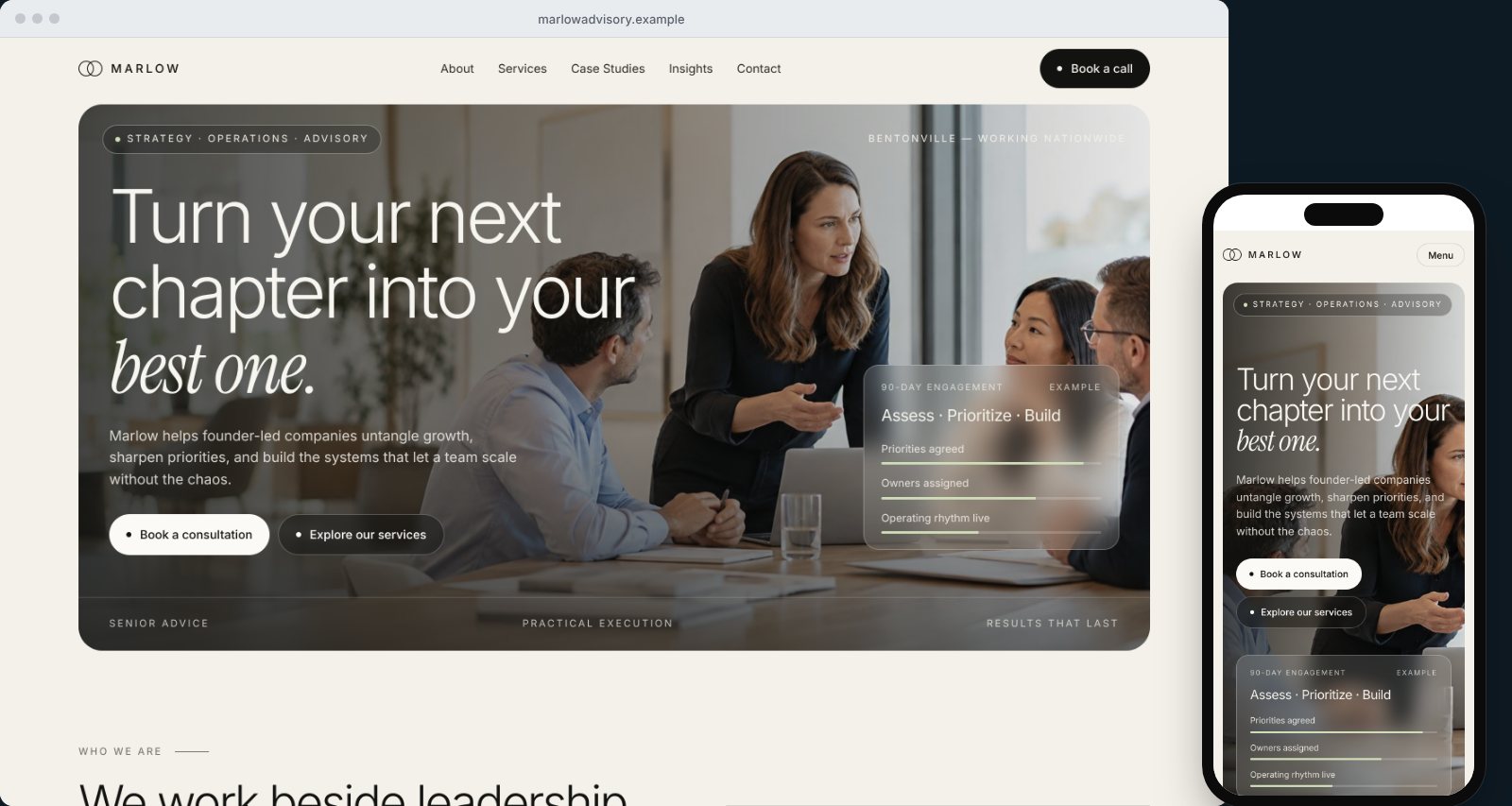
Our sample consulting homepage leads with a plain-English promise, then backs it up with the firm's approach, outcomes, and team.
Service pages that sell the engagement
Each service should have its own page that explains:
- Who it's for and the signs they need it.
- What's included, with deliverables named plainly.
- How the engagement runs: phases, timelines, and how you communicate.
- What changes for the client when it's done.
- How to start, with a clear next step.
When a prospect arrives at the first call already understanding the scope and value, the conversation moves faster and the fit is better. See the sample operations consulting page for this structure in practice.
Proof beats promises
Case studies
A short, specific case study (the client's situation, what you did, and the measurable result) is often the most persuasive page on a consulting site. Anonymize when you need to; specificity matters more than names.
Expert bios
Buyers hire people. Give each principal a real bio with relevant experience, credentials, industries served, and a professional photo. LinkedIn links help, since many buyers check there too.
Thought leadership
Articles that answer the questions your buyers are already asking build credibility and bring in search traffic. One useful article a month, written around a real client question, compounds over time.
Design the first conversation
Professional services buyers are wary of being sold to. Make the first step feel low-risk: "Book a 20-minute intro call" beats "Contact sales." Then use the form to qualify the conversation with a few smart questions, such as team size, the kind of help needed, and timeline.
Our sample intro call form captures exactly that, so you walk into every first call prepared.
Getting found by the right buyers
- Build pages around the specific problems and services buyers search for, not just your firm name.
- If you serve a region, mention it, and keep your Google Business Profile complete.
- Earn reviews and recommendations on Google and LinkedIn.
- Publish helpful articles consistently; they attract searchers earlier in their research.
Common professional services website mistakes
- Vague positioning. "Strategic solutions for growing organizations" could describe almost anyone. Name the clients and problems you know best.
- A team page with no people. In a relationship business, clients hire people. Show real photos, roles, and short bios.
- No process explanation. Prospects worry about what working with you will look like. A simple three to five step outline answers that.
- Case studies with no outcome. "We helped a client with their operations" says nothing. Describe the problem, what you did, and what changed.
- One contact button with no context. Tell visitors what happens after they reach out, how long a first call lasts, and that it's free.
Show your expertise with useful content
Consultants, agencies, architects, and other professional firms sell judgment. The best way to show judgment before a first meeting is to share it. Short articles that answer real client questions ("When should a small business hire a fractional CFO?" or "What does a commercial remodel actually cost per square foot?") demonstrate how you think.
Good content also keeps working long after it's published. It brings in search traffic, gives your team something to send prospects, and makes your expertise easy to verify. Aim for practical, specific advice over trend pieces, and link each article to the related service page so interested readers know where to go next.
If writing isn't your thing, record a short conversation with a partner about a common client question, then turn the transcript into an article. You'll keep the authentic voice without the blank page.
Measure what your website brings in
Professional firms often assume their business comes from referrals alone. But referrals almost always check your website, and it helps to know whether it's helping or hurting. Track consultation requests and calls from the site, and ask every new client how they found you and whether they looked you up first.
Over time, those answers show which pages and services pull their weight. If one service page consistently produces inquiries, build similar pages for related services. If prospects mention a case study, add more. Treat your website as part of your business development process, not a brochure you update once every few years.
How FreshSite builds professional services websites
FreshSite builds custom websites for consulting, advisory, engineering, and other professional services firms, with service pages, bios, intro call forms, and search basics included, then hosts and maintains them for one monthly price. Plans start at $59 a month with a $299 setup fee, and our Growth plan adds a keyword-optimized article every month.
See more on our professional services websites page, or book an intro call.
Frequently asked questions
What makes a good consulting firm website?
A clear statement of who you help and the problems you solve, a page for each service, evidence of results such as case studies or client outcomes, bios that establish expertise, and an easy, low-pressure way to start a conversation.
Should a professional services firm publish pricing?
Many don't, but sharing how you price, such as project-based, retainer, or a starting range, helps qualify prospects and reduces wasted calls. Even a sentence like 'most engagements start around' builds trust.
How important are case studies?
Very. Buyers want proof that you've solved problems like theirs. A short case study with the client's situation, what you did, and the result, even anonymized, is often the most persuasive page on a consulting site.
How long should a professional services website take to build?
With content ready, a focused five-to-fifteen-page site can launch in a few weeks. FreshSite Professional sites typically launch in 7 to 10 business days once we have your information.