Engineers and buyers don't want a sales pitch. They want to know, fast, whether you can make their part to spec, on time. Your website is where they check.
Key takeaways
- Most industrial buyers review a supplier's website before sending an RFQ.
- Technical buyers do most of their research online before contacting anyone.
- Detailed capability pages and equipment lists win the shortlist.
- An RFQ form that accepts drawings is the most valuable page on the site.
Industrial buyers decide online
Research from Thomas found 73% of industrial buyers look at a supplier's website before submitting an RFI, and most use search engines to find new suppliers in the first place. TREW Marketing's 2026 research found technical buyers complete about 62% of the buying process online before contacting a supplier.
In other words, the shortlist is often decided before your phone ever rings. A buyer who can't quickly confirm your capabilities, tolerances, and certifications will move on to the next shop that makes it easy.
What the first screen should tell an engineer
- What you do: CNC machining, fabrication, welding, stamping, assembly.
- What makes you a fit: materials, part sizes, tolerances, volumes.
- Proof: certifications like ISO 9001 or AS9100, years in business, industries served.
- How to get a quote: an obvious "Request a Quote" button.
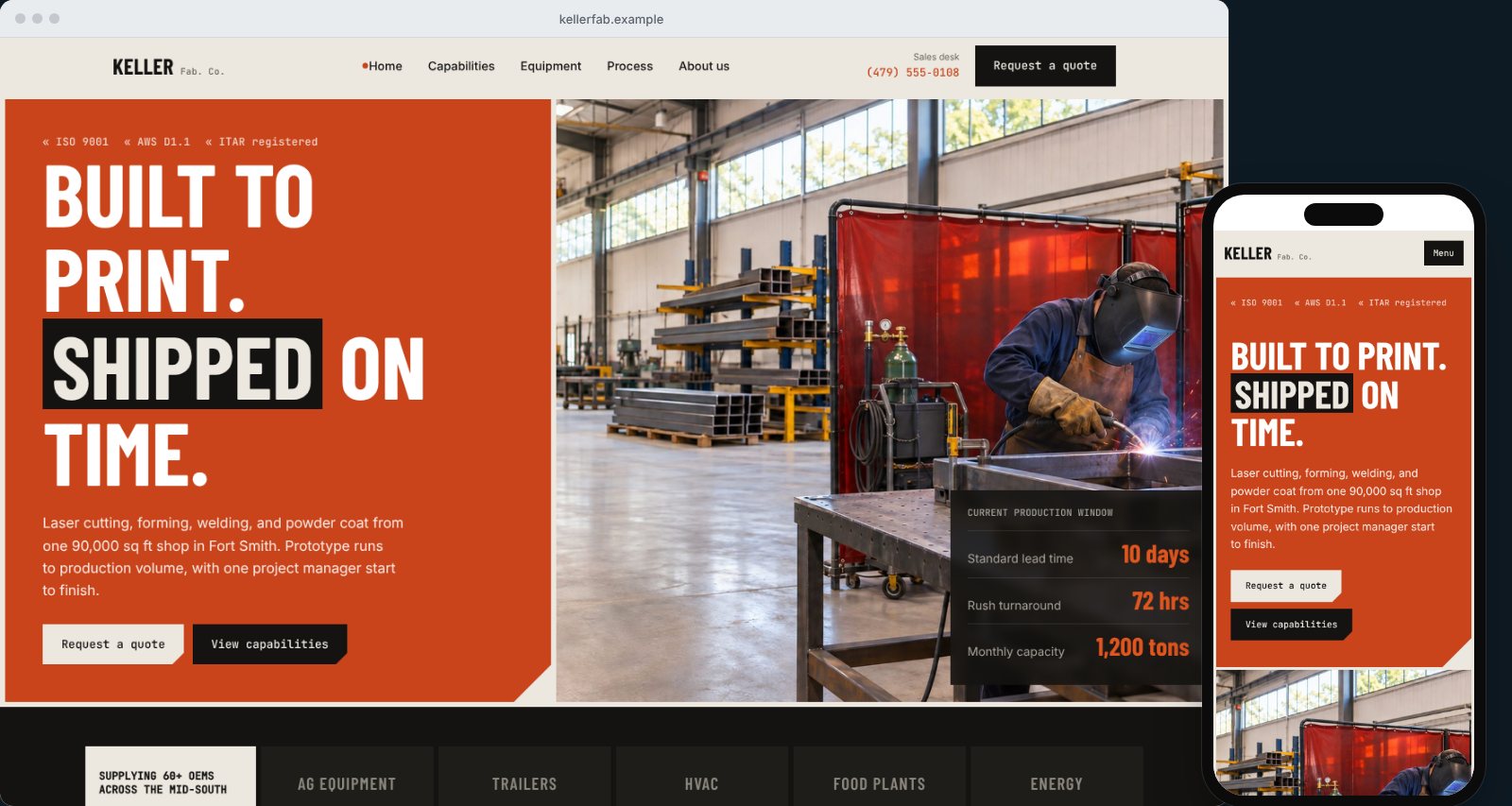
Our sample fabrication homepage leads with real shop photography, a short capability summary, and a quote button, with certifications and industries right below.
Capability pages are your best salespeople
Engineers search for specific processes and materials. Each core capability should have a page that covers:
- The process and what kinds of parts it's best for.
- Materials you work with.
- Size limits, tolerances, and typical volumes.
- The equipment behind it.
- Secondary operations and finishing options.
- Photos of real parts you've made, where customers allow.
See our sample CNC machining page, which lays out materials, tolerances, and machine capacities in a format an engineer can scan in seconds.
Publish your equipment list
An up-to-date equipment list is one of the most visited pages on a manufacturing website. It tells buyers exactly what you can do: machine types, makes and models, axis counts, bed sizes, tonnage, and inspection equipment. A simple, well-organized table works best.
Show your quality system
- Certifications and registrations, with downloadable certificates where possible.
- Inspection equipment, such as CMMs and optical comparators.
- Quality processes like first article inspection, PPAP, and traceability.
- Compliance with standards such as ITAR registration or RoHS, if they apply.
Quality details reassure buyers in regulated industries and set you apart from shops that don't show their work.
An RFQ form that accepts drawings
The single most important page is your RFQ form. It should let buyers upload drawings and CAD files (PDF, STEP, IGES, DXF), and ask for material, quantity, tolerances, finish, and due date. Keep it short, explain what happens next, and commit to a response time. Our sample RFQ page shows how to do this cleanly.
Mention confidentiality and offer to sign an NDA. Engineers sharing proprietary designs want to know their files are safe.
SEO for manufacturers
- Build pages around capabilities, materials, and industries buyers search for.
- Complete your Google Business Profile and keep it updated with shop photos.
- List your company consistently on Thomasnet, industry directories, and Google.
- Publish practical content, like design-for-manufacturability tips, that engineers find useful.
Gartner research shows buyers spend far more time researching on their own than meeting with suppliers, so content that answers engineering questions puts your name in front of them early.
Common manufacturing website mistakes
- A site written for the owner, not the buyer. Company history matters less to an engineer than tolerances, materials, and capacity.
- "Call for details." Buyers researching at 10 p.m. won't call. Put the specifics on the page.
- No file upload on the RFQ form. Asking engineers to email drawings separately adds friction and lost leads.
- Outdated equipment lists. A list that's missing your newest machine undersells what you can do.
- No industries section. Aerospace, medical, agriculture, and energy buyers want to see that you understand their requirements.
Your website helps you hire, too
Skilled machinists, welders, and technicians are hard to find, and many check out a shop's website before applying. A careers page with real photos of your floor, the equipment people will run, shifts, pay ranges, training opportunities, and benefits gives candidates a reason to choose you.
Show what makes your shop a good place to work: a clean, well-lit facility, modern machines, apprenticeship programs, or long-tenured employees. Keep the application short and mobile-friendly. A strong careers page supports your sales story too, because buyers like to see a stable, well-run operation behind the parts they order.
Measure what your website brings in
Manufacturing sales cycles are long, so it's easy to lose track of where an opportunity started. Set up tracking for RFQ submissions and phone calls, and ask every new customer how they found you. Over a few quarters, you'll see which capability pages, industries, and searches bring in real work.
Use that information to decide what to build next. If aerospace RFQs are growing, add an aerospace page with your relevant certifications and part examples. If a capability page gets traffic but few quotes, add clearer specs, better photos, or a more direct call to action. Treat your website like any other piece of shop equipment: maintain it, measure its output, and upgrade it when it's holding you back.
How FreshSite builds manufacturing websites
FreshSite builds custom websites for fabricators, machine shops, and contract manufacturers with capability pages, equipment lists, RFQ forms with file uploads, and search basics included, then hosts, secures, and maintains them for one monthly price. Plans start at $59 a month with a $299 setup fee.
See more on our manufacturing websites page, or tell us about your shop.
Frequently asked questions
What should a manufacturing website include?
Detailed capability pages, an equipment list, materials you work with, tolerances, certifications, industries served, project examples, quality processes, and an RFQ form that accepts drawings and CAD files.
Why do manufacturers need SEO?
Most industrial buyers start with a search engine and research suppliers online before contacting anyone. Capability pages built around what buyers search for, like 'CNC machining aluminum' or 'custom metal fabrication Arkansas,' help you get found and shortlisted.
Should a machine shop list its equipment online?
Yes. Engineers and buyers use equipment lists to judge whether you can make their part. Include machine types, sizes, axes, and capacities, and keep the list up to date.
What makes a good RFQ form for manufacturers?
It should accept file uploads like PDFs, STEP, and DXF files, and ask for material, quantity, tolerances, finish, and due date. Keep fields short, show what happens next, and give a response time you can meet.